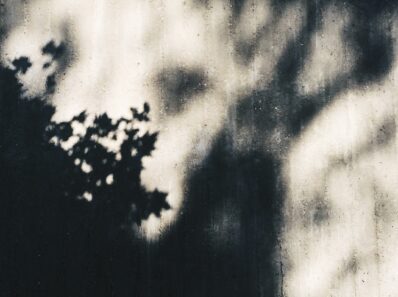
The weak morning light of winter is reaching through my semi-circle windows, casting shimmery, half-sun shapes on the wall. I huddle under a blanket in the corner of the couch as my fingertips reverently trace the familiar lines of ancient text, the beginning pages of the Torah. Nestled within this creation narrative, I close my eyes and savor the breathtaking poetry of the first inhaling of humankind. Divine hands molding dust with careful precision. Gentle fingers smoothing curves and contours. The rushing of lungs, exhaling the spirit of life into freshly sculpted nostrils. I breathe in and out.
Shifting my weight to alleviate a sore back muscle, I take it in. We are flesh and spirit, formed from dust and divine breath, and our brokenness is evident in all of the ways we wrestle against this intended harmony. We lean one way and then the other, struggling to find the balance of living as both. The brass pendulum of my vintage clock sways back and forth as I meditate. My mind flits toward a memory of swinging beneath a gnarled oak tree. I can still feel the sun as it dappled through the leaves spilling onto my freckled skin. I swung up to the highest point in the bright sunlight, weightless for an instant. Then the pull of gravity carried me downward, my tangled hair tousled about the front of my face. Passing the midpoint, I ascended into the shade of the tree. Back and forth, the wind behind and before me, the sun playing hide and seek. I picture this scene, oscillating from one height to the next, as I contemplate the conundrum of humanity as both flesh and spirit. We are walking, breathing paradoxes and as we age we feel the strain of it in our creaking bones. It’s laughable and mystifying, to believe that the Spirit of God dwells within the limitations of this worn body that groans with aches as time passes. When we slow long enough, the tension wars within us. Both seemingly at odds and yet equally vital to who we are and were made to be. And we are not very adept at it, this living as both.
At times we try to exist suspended high in the shadow of the trees, as though we are only flesh. We let our temporal selves rule and teeter into a sort of scattered nihilism. With little care for the others outside of our immediate circle and without a drive for higher purpose, we are pulled toward indulging any urge that comes our way. It is self-absorption, or perhaps more accurately, flesh-absorption. Our comfort becomes our god. This can lead to selfish disregard, and we have seen the kind of destruction that this breeds, both in ourselves and in our world. Humans were never intended to live governed only by their impulses. And yet we do it, not always embraced to this extreme, but certainly in moments of each day that add up over a lifetime. Slowly these patterns can pull us into an addictive cycle of escapism and dissociation until we are no longer connecting with the spirit within us. The etymology of the word “addiction” in latin comes from a word the Romans used to describe being given over to slavery. And that’s exactly what this becomes. We all have our own addictions, our own ways of becoming enslaved by our flesh. It often happens in subtle ways, until one day we find that the activities of our lives have come to reflect the broken hopelessness of a breath—less existence. We were never made to live as only dust.
At other times, we swing up into the sunlight, endeavoring to live as if we are only spirit. Though our pride may fool us, this has the ability to create the same level of ruin. When we attempt to deny the dust of ourselves and mentally remove ourselves from this world, we will often find another form of selfishness, one that has been white-washed in self-righteousness. A different sort of disregard, that says “Who cares what happens to this world if I am destined to leave it?” And yet, if this is true, then why are we wrapped in flesh and bones? We were placed here to tend, cultivate, and steward a world composed of the very same dust from which we were formed. Has this missive been revoked? No, it is even moreso our job to care for this world and its inhabitants, in all of its aching fragility—to be a part of its restoration. Yet we often willingly choose to separate from the flesh, to engage in elitist tendencies and set ourselves somewhere high above this world and our duty to exist within it. Again not always in extreme and obvious ways, but with sneaking subtlety. In our busyness and hurried spirituality, we often begin to turn our eyes away from the needs in front of us. We distract ourselves, until our hands are no longer calloused with the dirt-worn grooves of those know the very feel of the soil beneath us. Until we have forgotten to take in the shape of a hungry child’s face, the warmth of a gentle hug, the charity of a fresh meal on a doorstep, the way a listening ear decreases the frown lines of a widow’s grief, the satisfaction of a newly planted tree. Our busy schedules of “talking about doing good,” can over time, remove us fully from the flesh of the world in which we live to “do good.” Until we have become so “enlightened,” that we are empty husks, blown away on the wind. Again, perhaps not all at once, but certainly if we do not remain vigilant to the practice of being present in the dust. We were never made to live as only spirit.
And maybe this is the source of much of humanity’s tension—in our desire for black and white security, we are prone toward the pendulum of extremes. We are uncomfortable with fighting to remain in the balanced center. In our frantic swinging, we dizzy ourselves and forget how to live as the purposefully intended cataclysm of flesh and spirit. Living dust.
I walk my fingers through thin pages turned, as the room around me brightens incrementally. To stories told from ancient cities long ago, when Christ, the Spirit of God walked among us. He intentionally entered humanity saying, “Here, watch me. I’ll show you how to live.” Through divinity encased in human flesh, I can catch a glimpse of how we were intended to exist. My mind reels through story after story of Christ uniting that which we would assume does not belong as one. God was scandalously birthed from the outcast womb of an unwed teenage girl. A vulnerable, squalling babe, brought forth onto the unkempt dust of a barn floor. He grew and struggled in the dust of our earth, broken as it is. He was fully present in the finite now, and yet also wholly aware of an infinite purpose outside of space and time. He moistened dust with his own saliva to cake upon a blind man’s eyes, restoring physical and spiritual sight in an instant. He touched the scaly dust on the lepers’ cracking skin before it was returned to youthful tenderness. He knelt in the dirt to mercifully wash the dust from the feet of the very one who would betray him to his brutal death. From the embraced dust, his spirit breathed healing and life that transcended the flesh.
And this is our example, how we were meant to live during our short time here on earth. Fully present in the dust, motivated by the breath of his Spirit within us. Flesh and Spirit. Dust of the earth infused with the wind of His divine breath. Dust and divine breath.

Kathryn Eileen,
Very well explained , the tension between humanity and spirituality and the pitfalls of leaning too heavily on one to the exclusion of the other. Our creator is amazing to combine both in Jesus “fully God and fully human”. I especially liked, ” Here, watch me. I’ll show you how to live.”
Katie, wow. I feel I could meditate line by line on this post. Thank you for so eloquently describing the burden and journey and adventure that is being human and that is struggling to live in the in-between that we’ve been created for. This is beautiful. Thank you thank you thank you for your spirit-led words.